A popular question within the AI art community in 2026 is about where the legal line needs to be drawn when prompting AI. The short answer is: you’re probably fine; but with some massive “ifs.”
For the most part, firing up a hentai AI generator for a private project is generally legal across the globe. Why? Because the law generally cares about people, and in purely fictional anime-style art, there simply isn’t a person there to protect.
However, the legal landscape isn’t a static map; it’s a shifting tide. With new regulations hitting the books in the US, EU, and beyond, staying safe requires more than just a good GPU; it requires a bit of legal literacy.
The “No Victim, No Crime” Foundation
The central pillar supporting the legality of AI hentai is the absence of real-world victims. In traditional adult media, laws are designed to prevent the exploitation of performers, ensure consent, and protect privacy. But when you’re dealing with pixels and latent space, no actual person is photographed, filmed, or modeled.
Because the content is purely synthetic and fictional, it bypasses the core legal triggers that usually land creators in hot water. You aren’t invading someone’s privacy or producing non-consensual intimate imagery because the subject of the art doesn’t exist in the physical world.
For decades, courts have treated manga, doujinshi, and hand-drawn anime as protected artistic expression. In 2026, AI-generated hentai is largely seen as the digital successor to those traditional mediums.
The Three “Hard No’s” of 2026
While the victimless argument is strong, governments haven’t been sitting on their hands. To keep your AI generation within the legal green zone, you must navigate three major red flags:
- The Appearance of Minors: Even if a character is 100% fictional, if they look underage, you are entering a legal minefield (more on this below).
- Non-Consensual Deepfakes: Using a real person’s likeness without their “okay” is a fast track to a felony in most jurisdictions.
- Distribution and Commercialization: What you do in the privacy of your own home is one thing; what you post on a public forum or sell for a profit is an entirely different legal beast.
United States: The First Amendment vs. The States
In the U.S., your primary shield is the First Amendment. For over twenty years, the landmark Supreme Court case Ashcroft v. Free Speech Coalition (2002) has been the gold standard. The Court essentially ruled that the government cannot ban virtual or computer-generated depictions of minors because no real child is harmed in the making of the image.
However, “legal” doesn’t mean “unregulated.” Federal law (18 U.S.C. § 1466A) still keeps an eye on material that is indistinguishable from real child pornography and lacks serious artistic value. While anime-style hentai rarely meets this indistinguishable threshold, the definition of artistic value is often in the eye of the beholder or the prosecutor.
The Great State Divide
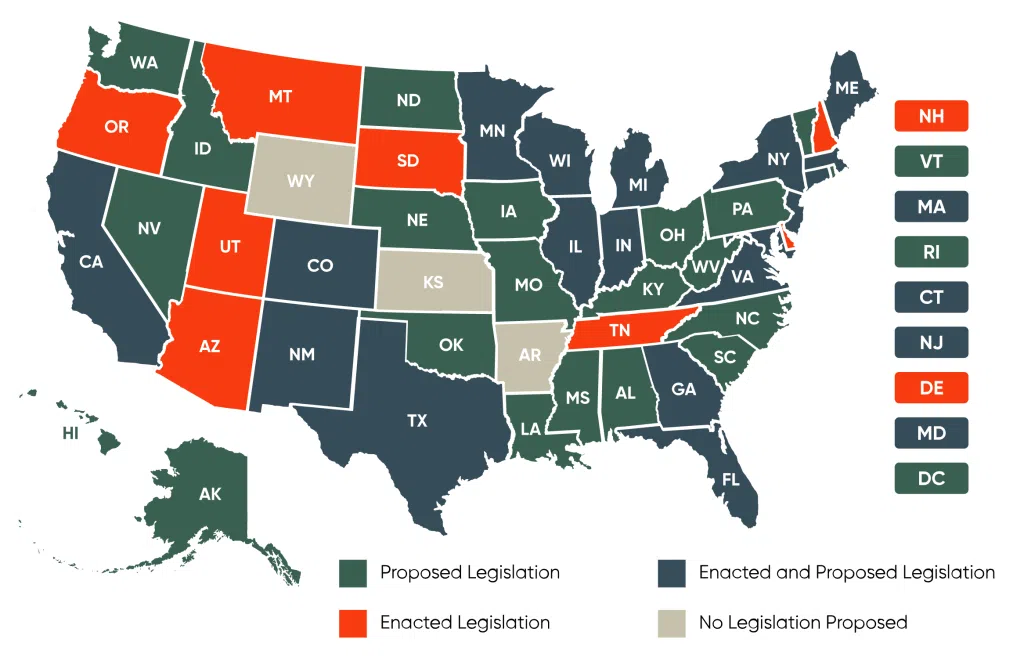
By 2026, the real action is happening at the state level. We’ve seen a massive divergence in how different states handle AI.
- Texas (The SB 20 Era): Since late 2025, Texas has taken a hard line. SB 20 criminalizes obscene visual material that even appears to depict minors. This includes cartoons and AI. If you’re in Texas, the “it’s just a drawing” defense is much harder to lean on.
- California (The AB 1831 Expansion): California has expanded its CSAM (Child Sexual Abuse Material) definitions to treat high-fidelity synthetic images with the same weight as real photos.
- The Federal “TAKE IT DOWN” Act: Signed in May 2025, this federal law isn’t about fictional characters but about people. If you use AI to create intimate images of a real person (revenge porn or celebrity deepfakes), you are violating federal law. The law mandates that platforms remove this content within 48 hours, and the penalties for creators are severe.
Japan: The Cultural Safe Harbor
If the U.S. is the land of “it depends,” Japan remains the land of “it’s fine, mostly.” As the birthplace of hentai, Japan has a long-standing cultural and legal distinction between real-life exploitation and fictional erotica.
Japanese law, specifically the Child Pornography Prohibition Act, is laser-focused on actual minors. There is almost no restriction on fictional characters, regardless of how youthful they may appear, provided they are clearly presented as anime/manga constructs. For users who rely on Japanese-hosted models (like many popular LoRAs or Stable Diffusion checkpoints), Japan’s permissive stance offers a level of stability that doesn’t exist in the West.
However, even Japan is feeling the heat regarding deepfakes. In early 2026, the Japanese government began leaning on platforms like X (formerly Twitter) to crack down on AI-generated images of real celebrities, proving that even in the most permissive regions, identity is the new legal battleground.
The EU: The Transparency Hammer
The European Union doesn’t ban AI hentai, but it does want to make sure everyone knows it’s AI. The EU Artificial Intelligence Act, which reached full rollout stages by February 2026, focuses on risk-based regulation.
Most hentai generators fall into the Limited-risk category. This means that by August 2026, any AI tool serving EU citizens must include transparency measures. If you generate a piece of art, the AI provider is legally required to embed machine-readable watermarks or metadata identifying it as synthetic.
- The Pro-Tip: If you’re using a tool that doesn’t label its work, and you’re located in Berlin or Paris, the provider is the one at risk, but you might find your favorite tools suddenly geoblocking your IP to avoid EU fines.
How to Stay Safe: A 2026 Checklist
If you want to enjoy AI hentai without looking over your shoulder, follow these four Human rules:
- Keep It Local: If you run your AI on your own hardware (local Stable Diffusion), you are 99% safer than someone using a cloud-based web service that logs every prompt and IP address.
- The Rule of 18: Ensure your characters have distinct, adult physical traits. Avoid the short/youthful tropes that trigger CSAM filters and local state Obscenity laws.
- Private Means Private: The moment you upload an image to a public Discord or a subreddit, you’ve moved from private expression to distribution. Distribution is where 90% of legal trouble starts.
- Avoid Real Faces: Never, under any circumstances, use a Celebrity LoRA or a real person’s face in an adult context. This is the one area where law enforcement is universally aggressive in 2026.
The Bottom Line
Is using a hentai AI generator legal? Yes, for now. But the Wild West era of 2023 is gone. We are now in the era of Managed Permission. As long as you respect the boundary between fiction and reality, and keep your weird hobbies on your own hard drive, the law generally has bigger fish to fry.
Stay smart, stay private, and remember: just because the AI can generate it doesn’t mean you should post it.