
Anyone who has spent any time on social media lately would likely have seen living anime characters (characters that blink, breathe, and move with a fluidity that looks like a high-budget studio production). This isn’t magic; it’s the result of several different AI technologies converging to solve the hardest problem in digital art: temporal consistency.
The reason video is so much harder than images is that the AI has to remember what it drew 1/24th of a second ago. If the AI forgets exactly where a character’s hair was or how many buttons were on their shirt, the video will flicker or melt. In 2026, we’ve finally found ways to stop the melting and start creating actual scenes.
The Core Technology: Motion Diffusion
At its heart, AI video works through a process called Motion Diffusion. Just like a standard image generator starts with a cloud of noise and carves out an image, a video generator does this across a sequence of frames.
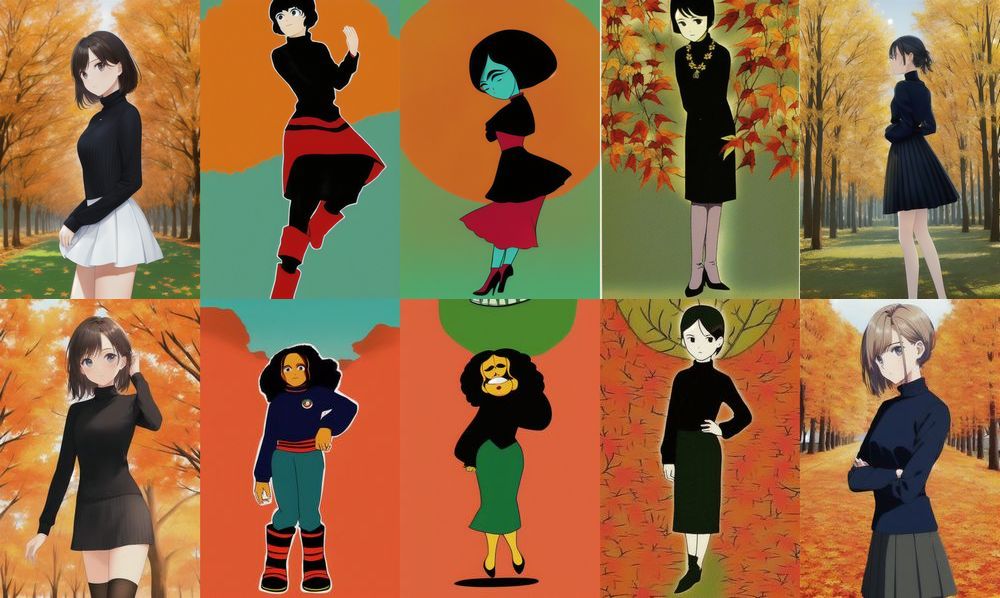
However, instead of treating each frame as a separate project, the AI uses Temporal Layers. Think of these as a series of invisible threads that tie the pixels of Frame 1 to the pixels of Frame 2. If the AI knows that a character is turning their head, these temporal layers ensure that the eyes, nose, and hair move in a synchronized 3D space rather than just shifting randomly.
By early 2026, models have moved beyond simple warping. They now understand physics-informed motion. This means the AI actually calculates the weight of the hair or the drape of a character’s outfit as they move. It’s no longer just a filter over a video; it’s a simulation of a 3D world rendered in 2D anime style.
The Three Paths to AI Animation
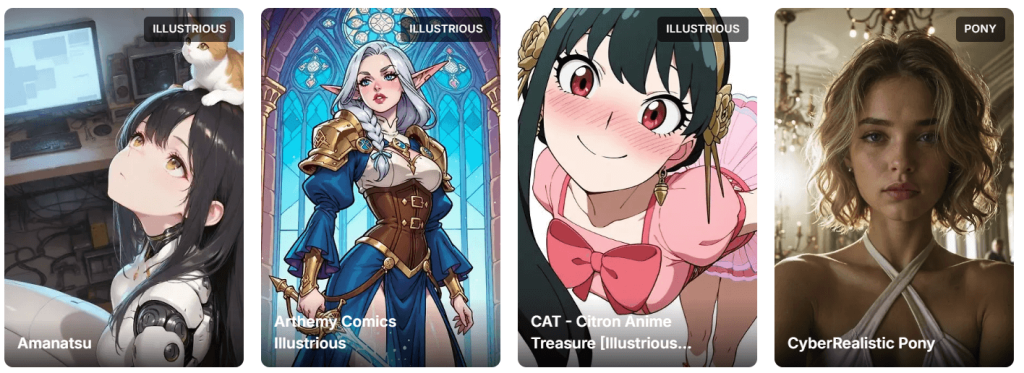
There isn’t just one way to make an AI video. Depending on your technical skill and the level of control you want, you’ll likely use one of these three methods currently dominating the 2026 landscape:
Image-to-Video (I2V): Animating Your Masterpiece
This is the most popular method on platforms like BetterWaifu. You take a high-quality static image you’ve already generated, your “hero shot”, and use a tool like Stable Video Diffusion (SVD) 1.1 or Luma Dream Machine to breathe life into it.
- How it works: The AI analyzes your image and guesses the motion. It looks at the flow of the hair or the position of the body and predicts how it should evolve over 3 to 10 seconds.
- The Result: It’s perfect for Live2D style loops, breathing effects, or subtle expressions. It’s the easiest way to start, but it offers the least amount of directorial control over specific actions.
Video-to-Video (V2V): The Rotoscoping Revolution
This is the secret weapon for complex action scenes. If you want a character to perform a very specific, complex movement, like a dance or a fight, you start with a “driving video” of a real person (or a 3D model) performing that move.
- The Transformation: You feed that source video into the AI, and the AI re-skins it into your chosen anime character. Because the movement and anatomy are already baked into the source video, the AI doesn’t have to guess where the limbs go.
- The Advantage: In 2026, this is the only way to get 100% realistic movement. It’s essentially AI-powered rotoscoping, and it’s how the most viral AI Anime clips are made.
The Power Users’ Secret: AnimateDiff and Temporal Kits
While Image-to-Video is the easy entry point, AnimateDiff is the engine room for the hardcore community. As of now in 2026, AnimateDiff V3 has become a legend in the uncensored space. Unlike other models that try to guess motion, AnimateDiff is a “plug-and-play” motion module that you can inject into almost any existing hentai checkpoint.
- Why it’s a game-changer: It doesn’t just animate; it inherits the style. If you have a specific LoRA that makes your character look like they were drawn by a famous 90s mangaka, AnimateDiff will animate that specific style.
- The Workflow: Most creators use it within a platform like ComfyUI. They build a pipeline where the AI generates 16 to 32 frames at once. This ensures that the character’s face, the background lighting, and even the subtle line-art thickness stay identical from the first frame to the last.
The 2026 Video Giants: Kling 2.6 and Native Audio
We can’t talk about AI video in 2026 without mentioning the massive leap in Audio-Visual Collaboration. For years, the problem with AI hentai was that the videos were silent. You had to go to a separate tool to add sound effects or voice lines, and they rarely synced up perfectly.
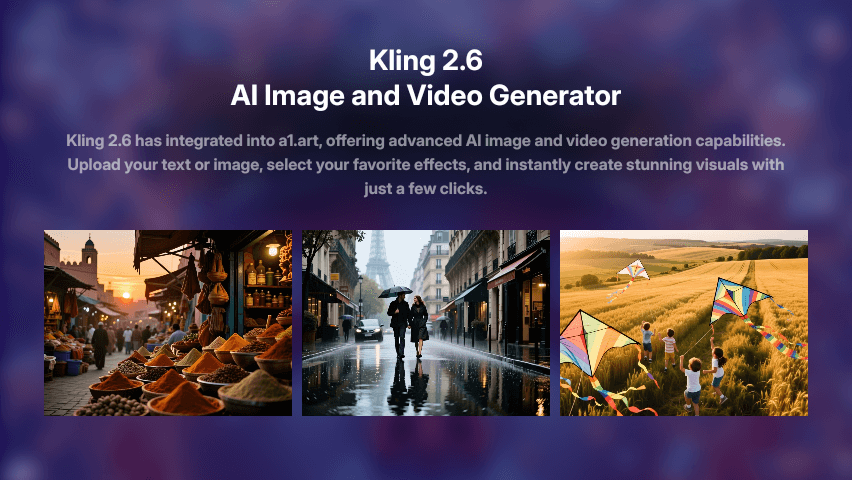
The release of Kling 2.6 in late 2025 changed everything. This model (and its uncensored open-source cousins) generates native, synchronized audio and video in one pass.
- Lip-Sync Accuracy: When the character speaks, the mouth movement is no longer just a random “opening and closing.” It is mapped to the specific phonemes of the audio.
- Contextual SFX: If a character moves quickly, the AI adds a “whoosh.” If there is a crowd in the background, it generates the ambient murmur. This multimodal reasoning makes the final animation feel like a finished product rather than a silent clip.
The Uncanny Valley and Common Hurdles
Despite the breakthroughs as of today, we aren’t at “perfect” yet. There are three main issues that creators still face when pushing the limits of AI hentai animation:
- Flicker (Temporal Instability): Even with the best motion modules, small details like jewelry or complex patterns on a character’s outfit can shimmer or change shape between frames.
- The 15-Second Wall: Generating a continuous scene longer than 15 seconds is still a massive strain on most consumer-grade hardware. Most full-length scenes you see are actually dozens of 5-second clips stitched together with clever editing.
- Anatomy Breakdowns: In fast-moving scenes, the AI sometimes loses track of how many limbs a character has. This is where ControlNet becomes essential, acting as a “digital skeleton” to keep the AI’s math grounded in human reality.
Conclusion: The Studio of One
We are rapidly moving toward a future where a single creator can produce an entire animated series from their bedroom. The technology behind hentai AI video is no longer just a “proof of concept”; it is a production-ready tool that is democratizing the art of animation.
Whether you are using Image-to-Video for a simple, breathing character loop or mastering Video-to-Video for a complex action sequence, the barriers between imagination and animation have effectively fallen. Today in 2026, the real challenge isn’t the technology but the direction. The AI provides the pixels, but the user provides the soul, the timing, and the vision.
The “Wild West” of AI animation is here, and for those willing to learn the tools, the possibilities are infinite. The only question left is: What are you going to direct next?