What Is AI-Generated Furry Art?
AI-generated furry art is a form of art whereby anthropomorphic animal characters are created with AI and prompt systems. The furry characters, also known as fursonas, exhibit animal features and share human traits. And as artistic characters, they can be portrayed standing upright, wearing clothes, showing emotion, and in any settings, fantasy or modernist.
Unlike the traditional process of sketching, colouring, and refining by hand, users simply describe their ideas with text prompts, and the AI transforms that description into a furry character image. Basically, users direct the process rather than the traditional way of physically executing it.
For decades, furry art was mostly created by skilled artists who used digital tools. Although the advent of software made the process faster and more flexible, it still required time, effort, and drawing ability. However, AI removes this technical barrier and replaces it with language such that any random user can now generate a furry character.
In practice, users can generate different furry characters and explore diverse character ideas, as long as they can clearly describe them.
Why People Are Turning to AI for Furry Art
More people are turning to AI for furry art. Not because of one “big” advantage but for a combination of things that make the experience easier, faster, and more flexible.
· Skill
For a lot of users, the biggest limitation has always been skill. It is one thing to have a clear idea of a character in your mind, but translating that into a polished furry art takes time and practice. With AI, however, users do not need to master/understand anatomy, shading, or software use just to bring an idea to life. If you can describe what you’re imagining in plain language, you can start creating.
· Speed
What used to take hours or even days can now happen in seconds. This does not just save time, it also changes the creative approach because users can now explore multiple variations (i.e., try different species, outfits, moods, or settings) and compare them side by side in a short period. This experimentation speed is hard to achieve with traditional methods.
· Flexibility
There’s also a level of freedom that comes with this approach, and thanks to that, users do not have to fix noticeable discrepancies manually. They only need to adjust the prompt (description), and the AI will generate a refined version. This iteration and refinement workflow makes the creative process less pressured and more exploratory for beginners.
· Character Exploration
For users within the furry community, character exploration is very useful when creating or evolving a fursona because they get to test variations and gradually shape a character (i.e., by trial and error) instead of settling on a single design from the start. Small changes in colour patterns, accessories, or expressions can completely evolve the concept.
· Creative Support
Even experienced creators use AI, not as a replacement, but as a tool. Because it helps them to generate rough concepts, inspire new ideas, and speed up the early stages of their project.
Taken together, people are turning to AI for a smoother creative process — No friction. It lets users focus more on ideas and less on the technical steps needed to produce furry arts and fursonas.
How AI Generates Furry-Style Images
Behind the simple interaction of typing a description in the form of a prompt and entering the prompt, there is an underlying process that determines how accurate, detailed, and consistent the AI-generated furry image appears.
Understanding the Core Technology
AI furry art generators today are built on diffusion models. A simpler way to understand it is this: the AI starts with visual noise, like static, and the system gradually transforms it into an image based on the prompt description.
The AI does not “draw” in the traditional sense. However, it predicts what the image should look like step by step, and it refines it until it matches your prompt as closely as possible.
There are also two main ways to go about it. The first is text-to-image, whereby the AI generates a furry character based on the user’s description. The second is image-to-image, where users give the AI a starting image and guide it to transform or improve it.
How Prompts Are Interpreted
Everything revolves around the prompt because it is how your idea and intent are communicated to the AI.
When users describe a character, the AI breaks it down and maps the wording/context to visual elements. If the prompt describes a species, the anatomy of the furry character will be shaped around that. If it describes colours or clothing, those details will be layered into the image. If it cues a style (e.g., cartoon-like, realistic, or something in between), the AI will render the artwork accordingly. If it mentions a pose or setting, the generator will also attempt to place the character within that scene.
Even so, a clear, organized description will produce more coherent results than an unstructured one.
Key Features of a Good AI Furry Generator
Most AI furry art generators offer a considerable degree of control over creativity and flexibility. However, one of the early signs is how well the system handles prompts. Some AI furry generators handle prompts meticulously and guide parts of the image, such as species, clothing, pose, and mood, without misinterpretation or mix-ups.
Style consistency is also a good sign. When users generate multiple versions of a character, the overall look should stay coherent (i.e., when the first generation is cartoon-like, the next must not suddenly shift into a completely different style unless the user specified it).
The generator’s image quality is also a strong point for users who plan to use the output beyond casual viewing. Because higher resolution results preserve details such as fur texture, facial features, and lighting better. Lower-quality outputs, however, can be blurry or lose definition when you try to scale them.
Speed is equally important. Not only in terms of how fast a fursona can be generated, but also by how quickly users can move through ideas. A responsive furry art generator can be used to test variations in succession.
With more control over the final image (i.e., customization), creators can shape their ideas into something more specific.
In practice, a good AI generator gives users enough structure to stay consistent, while still offering flexibility to explore different directions as your ideas evolve.
Prompts and Structure: How to Write Better Prompts for Furry Art
Prompt writing is the one skill that makes the most difference when using an AI furry generator. This is because the quality of your input directly affects the quality of your output. In real use, two people using the same tool can get completely different results just based on the prompt description.
However, it is less about using fancy words and more about being clear and intentional.
A Simple Way to Structure Your Prompts
A strong/detailed prompt usually follows a natural flow that begins with the subject, followed by the details.
- Define the character itself (i.e., the species and general type). For example, instead of saying “animal character,” one might say “anthropomorphic fox” or “wolf character.”
- The details provided about the furry character’s fur colour, clothing, and expression will shape its traits, appearance, and personality.
- The description should include a rendering style. Whether anime, semi-realistic, cartoonist, or otherwise.
- The details should place the furry character in a scene. Scenarios like city nights or a forest background drive context.
- Appropriate lighting can equally set the mood. Soft lighting, dramatic shadows, or bright daylight can totally change the tone of the image.
When prompts follow this kind of structure, they are easier for the AI to interpret, and the results thereafter will be more consistent.
Example of a Clear Prompt
Here is a solid but simple example:
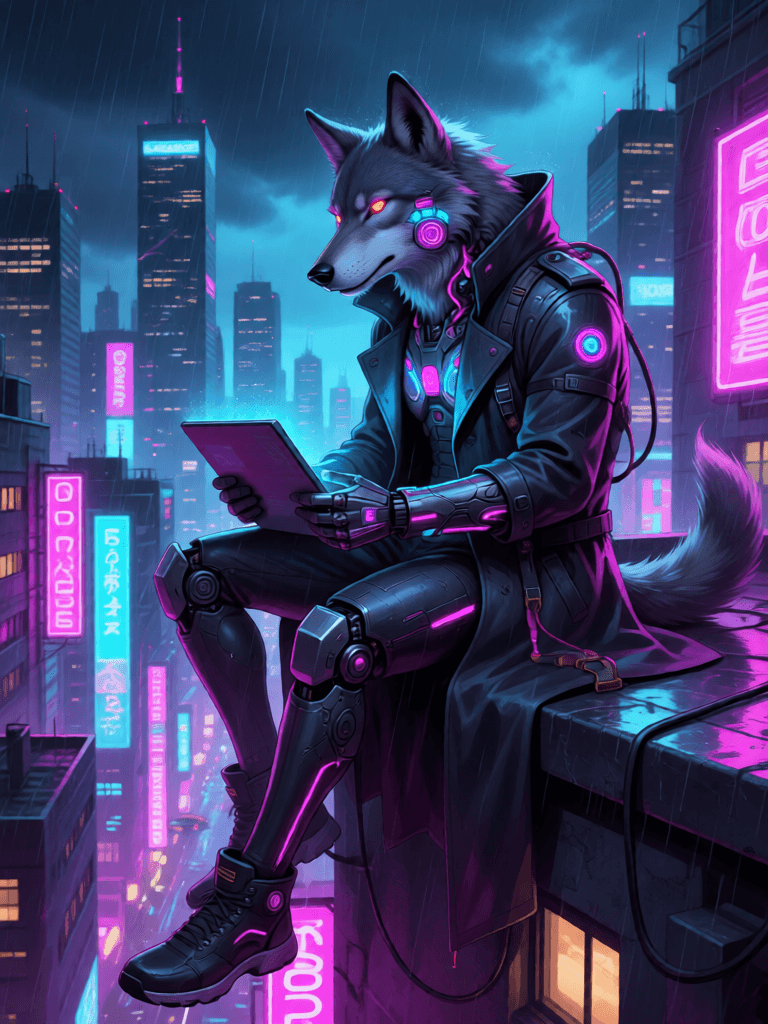
“Anthropomorphic wolf character, blue and white fur, wearing a casual jacket, relaxed expression, standing in a neon-lit city street at night, soft cinematic lighting”
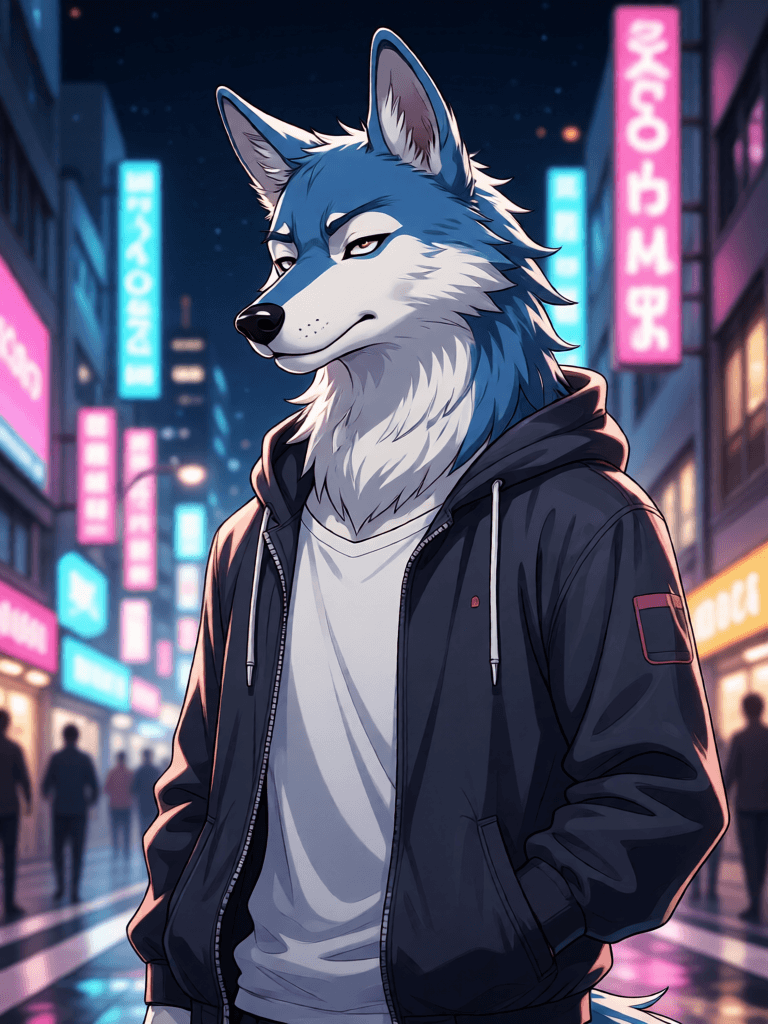
This works well because it moves from the character to the details, then to the setting and mood.
Common Mistakes to Avoid
When a prompt becomes overloaded with details, the AI may find it hard to prioritize what matters, and this can lead to messy or inconsistent results.
However, when the description is also too vague (i.e., when users don’t provide enough detail), the AI has to fill in the gaps on its own, and the outcome might not always match what you (the user) had in mind.
There’s also the problem of unstructured prompts. Because when the description is disorderly, the output will reflect that confusion. Therefore, keeping the prompt organized makes a noticeable difference.
Style and Customization: Creating Unique Styles with AI
AI offers a flexible base that you can adjust in different directions depending on your type of furry character.
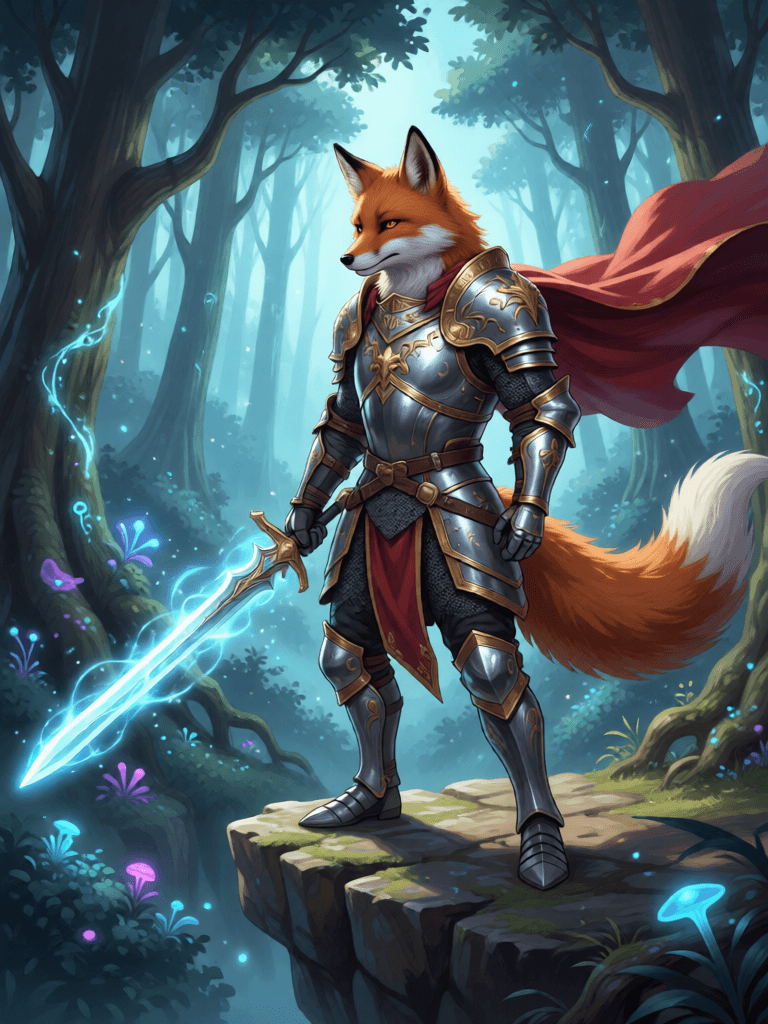
The character as a base, small choices like species, body type, or personality traits already influence the final look more than most people expect. A confident, upright wolf with sharp features will come across very differently from a softer, more relaxed fox character, even before you add extra detail.
Moreover, fur patterns, clothing, and colour can accentuate the mood of the fursona, making the character appear playful, grounded, or serious.
Similarly, the standing pose, or facial expression, gives a very chill impression. So, the same character can come off as calm, energetic, or even dramatic depending on how you describe their posture and facial expression.
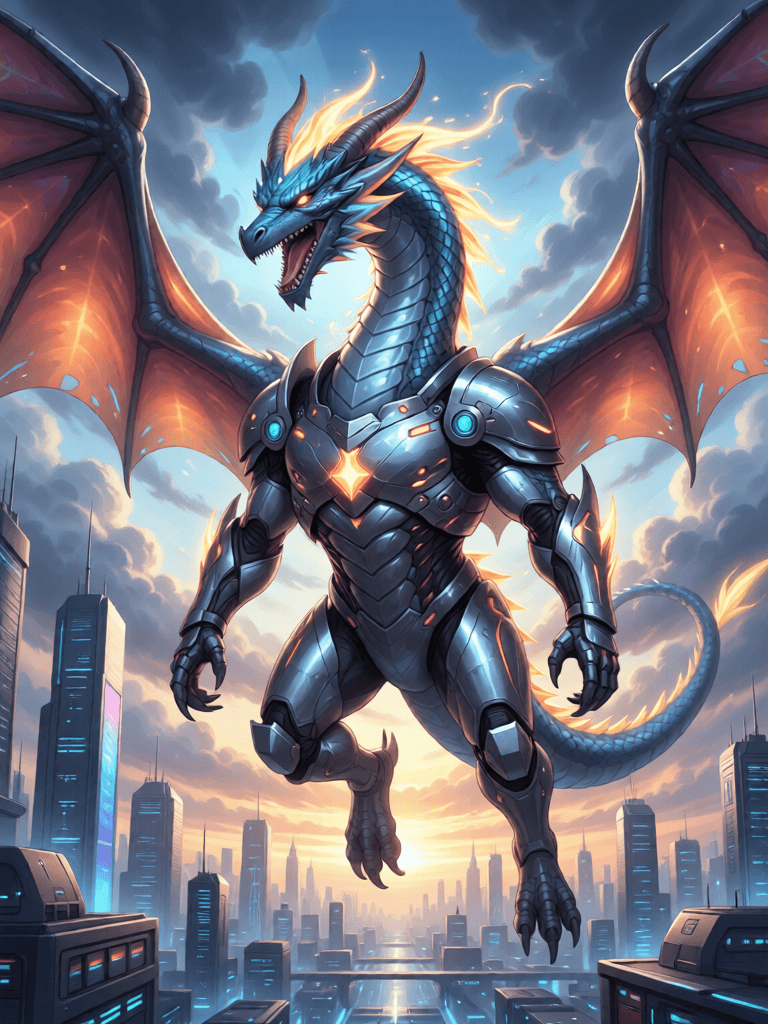
Then there’s the furry art style itself, which decides how the scene will be rendered.
Limitations of AI-Generated Furry Art
As useful as AI can be, it is not perfect.
An AI furry art generator might produce a good fursona, then struggle to recreate the same character in a slightly different pose or setting. This can be frustrating for creators who are trying to build a consistent character across multiple images.
There are also occasional visual errors in the form of awkward anatomy, strange proportions, or details that don’t quite fit. In AI-generated furry art, it shows up as deformity in limbs/limb positioning, facial structure, or how fur blends with clothing. More so, these imperfections can only be seen upon a closer inspection.
AI models are trained on large datasets, and as a result, repetition is inevitable. This means certain poses, compositions, or styles may show up more often than one would expect. By implication, different outputs might appear similar or generic unless users actively push/steer their prompts in new directions.
There’s also the question of originality. The AI’s ability to generate unique combinations is not in question; however, it cannot come up with original ideas in the same way a human can. It works by learning patterns and recombining them. Therefore, the description must be specific, and the prompts must also be intentional. Otherwise, the tool will only produce generic and mediocre results.
Nevertheless, none of these limitations makes the AI unusable. And once users recognize them, they are easy to work around.
Start by adjusting the prompts more deliberately, refining outputs instead of expecting perfection, and using the system in a way that plays to its strengths.
Responsible Use of AI Art Tools
AI-generated art has become mainstream, and the responsible use of its generators is just as crucial. The tools themselves are neutral, so it comes down to how people choose to apply or use them.
- Identity
There is a distinction between fictional and real-world subjects. AI furry art generally revolves around fictional characters (self-generated), and this makes it safer to explore as a creative space. However, it is a clear violation when users try to imitate real individuals and identities or reproduce well-known characters. Therefore, it is advisable to limit one’s artwork to personal and unique fictional characters.
- Existing Artists and Styles
AI models are trained on large collections of images, and while users may not see that process directly, it is still part of how the system works. Because of this, it is worth being mindful about how closely you try to mimic a specific artist’s style (i.e., respect existing artists and styles). Using AI as a way to develop your own ideas, rather than copying someone else’s look, is a better and more meaningful way to use AI art tools.
- Usage Rights
There may be different rules around how generated images can be used, especially for commercial purposes. It’s a good habit to check those terms before relying on the output for anything beyond personal use.
In practice, responsible use is all about being aware of what you’re creating, respecting the broader creative community, and making informed decisions about how you use the results.
How Creators Use AI-Generated Furry Art
AI furry generators can be used to support different kinds of creative work in many practical ways.
For Character Design
Creators can use an AI-generated furry art to explore what a character might look like. This functionality is helpful to creators who are building a fursona or refining an existing one because they can use the AI tool to test different colours, outfits, or expressions and see how each change will affect the overall feel.
For Concept Art
Users who have vague ideas for a scene or a furry character but are unable to visualize them properly due to a lack of expertise can generate a few variations of the ideas for inspiration and direction. Even if the results are not perfect, they give a starting point to build from — references.
For Storytelling
Whether it is for short comics, visual narratives, or just developing a world, character visuals make storytelling a lot easier. Therefore, storytellers can create furry art images that support their story and make it more grounded, where words may not suffice/be sufficient.
For Exploration
Hobbyists and furry art enthusiasts who just want to experiment with ideas can also try different styles to see what kind of characters they can come up with. The AI tool allows for that kind of creative approach.
For Visual Experimentation
Creators can also test combinations that might be too difficult or time-consuming to draw manually (e.g., different lighting setups, unusual colour schemes, or mixed styles). This helps to discover scenarios that might not have been considered otherwise.
In many cases, AI becomes part of a larger creative process for inspiration and for refinement. However, what ties all of these use cases together is flexibility.
The AI gives you a starting point, and from there, you decide how far you want to take it.
AI Furry Art Generators and Traditional Art: Differences in Workflow
In real use, there are key differences between AI generators and the traditional approach to furry art.
AI generators have earned a reputation for speed and flexible exploration capabilities. Therefore, users who want to test variations or visualize a furry character concept can do so without spending much time. More so, beginners go from having a rough idea to having multiple variations of that idea in minutes.
The traditional art process, on the other hand, offers a degree of control and intentionality in detail such that the hand-drawn lines, colour choice, and character composition are carefully selected, and the entire process is well thought out, from start to finish. This degree of precision cannot be matched or replicated by most AI systems, even with a well-structured prompt.
In addition, both approaches address consistency differently. The traditional approach makes it easier to retain a fursona’s characteristics and reproduce their style, features, and qualities across different poses and scenes once the character is defined from the start. However, an AI generator that relies only on prompts for guidance can produce remarkable results, but it may not be able to maintain the same characteristics across multiple generation attempts.
In terms of cost and accessibility, the AI lowers the barrier to entry such that users do not require years of experience just to create a visually appealing furry character. In contrast, traditional art requires time to develop skill, as well as access to some specific tools or software. This comes at a cost; however, it gives traditional creators deeper control over their art in the long run.
In practice, most creators do not necessarily choose one approach over the other. They use both simultaneously to complement each other — a hybrid approach. Therefore, creators can use the AI tool to generate the concept and explore the idea before traditional techniques are employed to refine and polish the final artwork.
Based on use cases, AI tools are exclusively for speed and experimentation. If the goal is precision and full creative control, traditional methods still have an edge. And when used together, you get the best of both.
Frequently Asked Questions on AI-Generated Furry Art
Q: How accurate are AI-generated furry images?
Very accurate when the prompt is clear. Moreover, accuracy can also be improved through iteration for cases where the AI-generated furry character needs refinement.
Q: Can a furry character be customized?
Creators can customize the characteristics (e.g., species, colours, clothing, mood, and settings) of their fursonas through a text prompt. A more specific description produces results just as they were imagined.
Q: Can the AI furry generation approach produce unique images?
The AI approach produces furry character images with unique traits, as long as the said traits are described accordingly in a structured text prompt.
Q: What are the prerequisites?
All that is required is access to the AI tool, then you can bring your characters to life with no prior artistic expertise.
Start Creating Furry Art with AI
Create furry characters with AI. Transform your imagination into a fully realized furry character.
Whether you are creating a new character, testing different styles, or just experimenting for fun, the process just became faster and more flexible.