
If you’ve spent any time in the AI art scene, whether you’re hanging out on Civitai or messing around with a local Stable Diffusion build, you know the struggle. You type in something you think is a gold-tier prompt, hit “Generate,” and… the AI gives you a girl with three legs and a face that looks like it was painted by a drunk toddler. It’s frustrating.
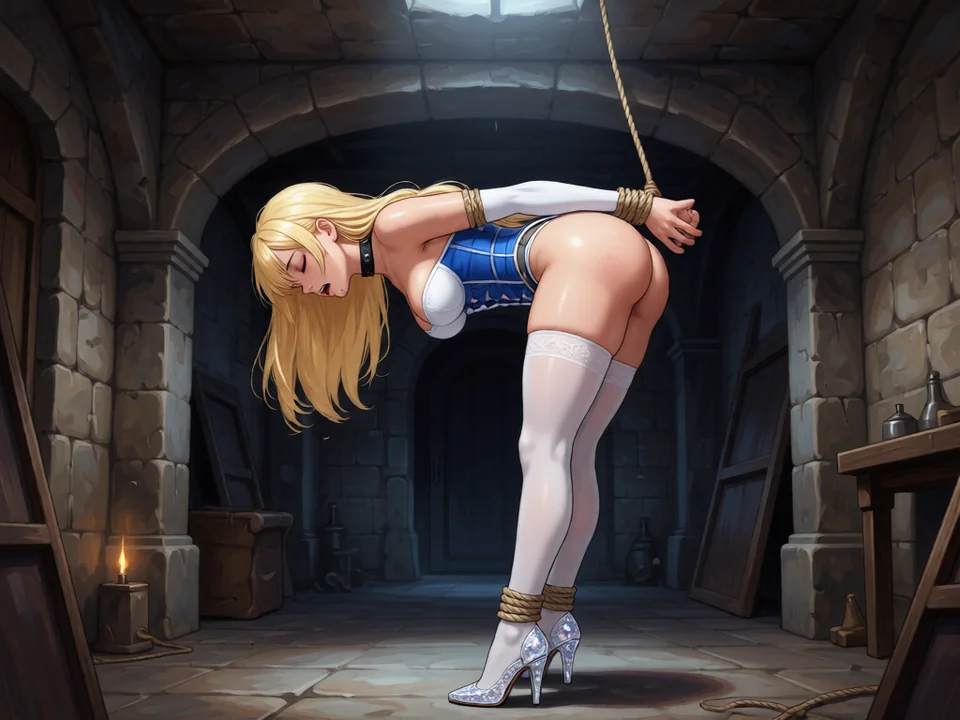
Generating high-quality hentai isn’t just about “dirty words.” In fact, if you just spam explicit terms, most models (especially the safe ones like DALL-E) will just block you, and the unfiltered ones will produce muddled, low-effort garbage. To get that crisp, professional-grade doujinshi look(the kind of stuff that looks like it was hand-drawn by a veteran animator), you need to understand the logic behind the prompt.
In this guide, we’re going to be walking you through the actual mechanics of Prompt Alchemy in 2026. We’re going to cover everything from character DNA to the technical hacks that keep your images from looking like AI-generated plastic.
The Skeleton (Why Your Structure Sucks)
Most people treat an AI prompt like a Google search and just type a list of things they want. That’s exactly why you’re getting undesirable results.
You need to understand that the AI (specifically the CLIP model that interprets your text) reads from left to right. Hence, the words at the beginning of your prompt have way more weight than the words at the end.
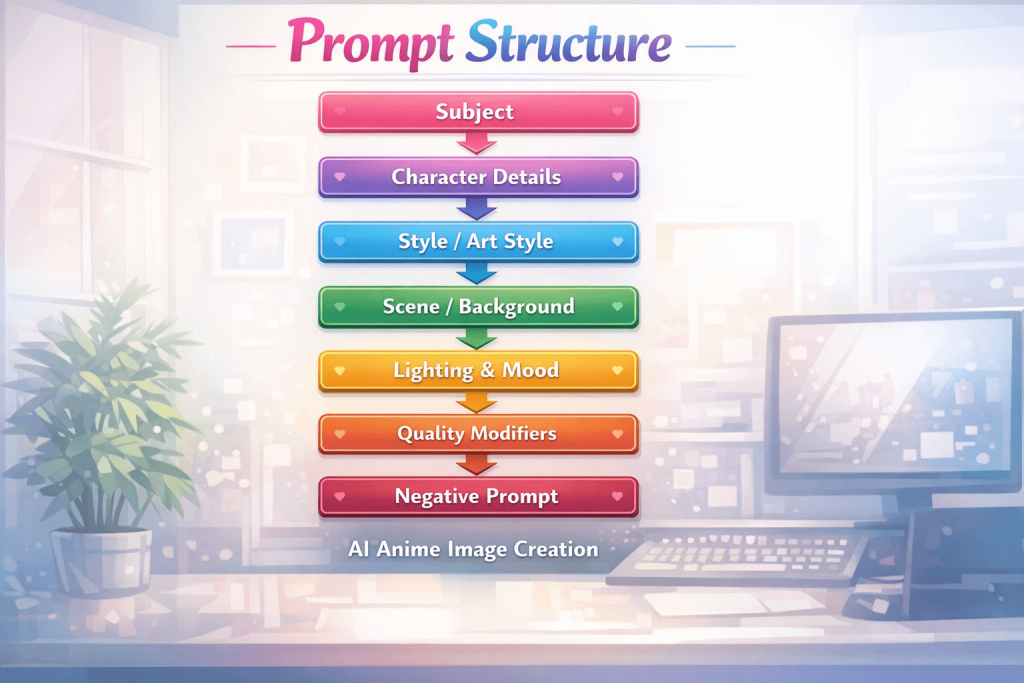
If you put (masterpiece:1.2) at the very end, the AI is already tired by the time it gets there. You need a hierarchy. We call it the “Anchor Method.”
- The Anchor: This is your core subject. (e.g., 1girl, solo, succubus)
- The Action: What is actually happening? (e.g., seductively posing, playful smirk)
- The Wardrobe & Traits: Specifics like micro-bikini, thigh-highs, long silver hair.
- The Environment)l: Where are we? Dungeon, neon-lit bedroom, rain-slicked street.
- The Artistic Style: This is where you cite your inspirations. Asanagi style, 90s retro anime, high-contrast cell shading.
- The Technical Quality: These are the power-ups. 8k, intricate detail, ray tracing, sharp focus.
If you follow this order, you’re giving the AI a logical path to follow. It builds the person first, then puts them in a scene, then paints them in a specific style.
Character Design (Don’t Be Generic)
Hentai in 2026 is a genre built on tropes and exaggerations. If you want the AI to capture that specific hentai energy, you have to stop using safe adjectives.
Anatomy and Proportions
Don’t just say “curvy.” That’s too vague for the AI. You want to use the language of the community. Terms like hourglass figure, thick thighs, narrow waist, and wide hips tell the AI exactly how to distribute the pixels. If you’re going for a specific niche, say, the short stack aesthetic, you need to combine descriptors like short stature with voluptuous.
The Face is the Soul
What tells the most that an image is AI is the dead eye look. To fix this, you need to describe the expression with more than one word. Instead of just blushing, try deep blush, heavy breathing, eyes half-closed, ahegao expression. This gives the AI a lot more data points to work with. It understands that ahegao isn’t just a face but a specific configuration of the tongue, eyes, and mouth.
Consistency with LoRAs
If you’re serious about this, you shouldn’t just rely on prompts. You should be using LoRAs (Low-Rank Adaptation). These are small files you plug in to your model to lock in a specific character or art style. When you use a LoRA, your prompt changes. It becomes: <lora:CharacterName:0.8>, CharacterName, [rest of your prompt]. This is how you get consistent characters across multiple images without them looking like different people every time.
Setting the Mood (Lighting and Background)
So much AI art looks cheap because of the lighting. Most models default to a flat, ” studio light that makes skin look like plastic.
If you want your hentai to feel cinematic, you have to play with light and shadow.
- Chiaroscuro: This is an old-school art term for high-contrast lighting. It’s perfect for moody or dark scenes.
- Backlighting / Rim Lighting: This puts a glow around the edges of the character, separating them from the background. It makes the character pop.
- Cinematic Lighting: Use this to get those deep, rich colors you see in high-end anime movies.
And for the love of all that is holy, describe the background. If you don’t, the AI will just give you a gradient or a blurred park. Give it something specific: cluttered otaku room, posters on walls, computer glow, messy bed, discarded clothes. This adds weight to the image. It makes it feel like a real moment in time, not just a character floating in a void.
The Anti-AI Technical Layer
To beat the generic AI look, you need to master the Negative Prompt. This is basically a list of things you’re forbidding the AI from doing.
A Human negative prompt should be targeted, and shouldn’t just be a list of 500 words you copied from a forum. If you see the AI making the skin too shiny, add (oily skin, plastic skin:1.2) to the negative. If the hands are a mess (which they always are), don’t just put “bad hands.” Use: (extra fingers, fused fingers, missing fingers, deformed hands:1.5).
The Artist Reference Cheat Code
One of the most powerful things you can do is blend artists. The AI knows what Studio Ghibli looks like, and it knows what Hentai looks like. If you prompt for Hentai in the style of Studio Ghibli, you get this weird, whimsical, high-quality hybrid that looks nothing like standard AI output.
Try blending:
- Style of Range Murata (for that sleek, futuristic look)
- Style of Masamune Shirow (for detailed, mechanical designs)
- Style of Akihiko Yoshida (for a painterly, RPG-fantasy feel)
Conclusion
Mastering the best hentai prompts isn’t about finding a magic word but about understanding that the AI is a literal-minded machine that needs a very specific type of guidance. Use the Anchor Method, don’t skimp on the Environmental Details, and always, always refine your Negative Prompts.
Keep experimenting. Swap one artist’s name for another. Change the lighting from “sunset” to “neon.” The beauty of AI is that you have an infinite canvas. Now go out there and start creating something that actually looks like it was made by a human.